
Nuru Ngailo
ASLM
When an outbreak reaches a community, waiting four or five days for a laboratory result can feel like an eternity.
For communities in Kasenyi and Tchomia in the Democratic Republic of Congo (DRC), this was a reality during the Bundibugyo virus disease (BVD) outbreak. Samples from suspected cases were being referred to Bunia for testing, creating delays at a time when health teams needed answers quickly.
The response was simple in concept, but significant in impact: bring the laboratory closer to where it was needed.
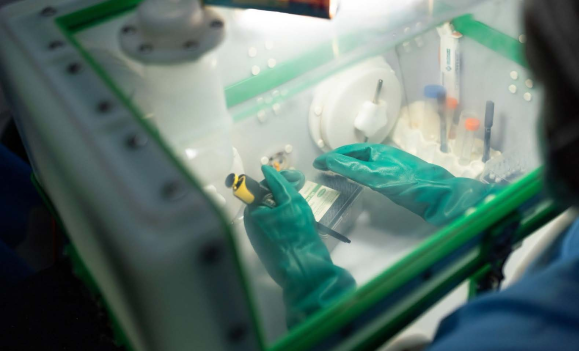
With support from Africa CDC and ASLM, two mobile laboratories were deployed to Kasenyi, bringing testing closer to the Ebola Treatment Unit and affected communities. What previously took approximately four to five days could now be completed in around six hours. That meant health teams could receive results on the same day and act more quickly on suspected cases.
Over the two-month period, 988 BVD samples were tested across the Aru and Kasenyi sites, with 101 confirmed positive. But the impact went beyond the number of tests performed. In Tchomia Health Zone, average daily testing increased from about 3.6 samples before the deployment to 14.9 afterwards-a more than four-fold increase.
The mobile laboratories also provided broader diagnostic support. Alongside BVD testing, teams were able to conduct fever-differential testing, biochemistry, haematology and rapid diagnostic tests. In Kasenyi, for example, malaria was detected in 30 of 62 samples tested for the major fever panel, including six cases where malaria and BVD were detected together.
But moving a laboratory into an outbreak zone is about much more than putting equipment in a new location.
It is about people.
Laboratory professionals from the response team worked alongside their DRC counterparts, sharing skills and solving problems together. Staff received practical mentorship in sample reception, safe specimen handling, molecular testing, data analysis, result interpretation, quality management, biosafety and biosecurity. The aim was not to create a temporary solution that would disappear when the outbreak ended, but to leave behind stronger skills and greater local ownership.
The work also reached beyond the laboratory. Health facilities were engaged to strengthen early identification of suspected cases, safe sample collection and referral. In Tchomia, community engagement through faith-based platforms encouraged people to recognise symptoms, seek care early and report to the Ebola Treatment Unit for assessment and testing.
At Aru, the focus was equally important but different. Located along the DRC-Uganda border and serving highly mobile populations, the laboratory needed to be ready not only to test, but to operate safely and reliably during a high-pressure response. Teams worked on laboratory organisation, biosafety and biosecurity, quality systems, documentation and safer workflows—while keeping testing going.
This experience offers a powerful reminder of what outbreak response really looks like. It is not one laboratory, one test or one team. It is a chain of people and systems working together—from the health worker who identifies a suspected case, to the person who collects the sample, the laboratory professional who processes it, the surveillance team waiting for the result, and the clinicians and responders who decide what happens next.
And behind that chain are partnerships that make rapid action possible.
For ASLM, supporting outbreak response is part of a wider commitment to ensuring that Africa has laboratories that are ready, connected and equipped with the people and systems needed to respond when it matters most.
The experience in DRC shows what can happen when the right expertise, partnerships and resources come together: the laboratory can move closer, results can come faster, local teams can grow stronger, and communities can be better served.