
ALGIERS, Algeria | 17 September 2026
Africa CDC, in collaboration with the African Society for Laboratory Medicine (ASLM) and the Institut Pasteur d’Algérie (IPA), this week conducted a five-day Biorisk Management (BRM) Level 1 Certification Training for 15 participants from seven Northern African Member States.
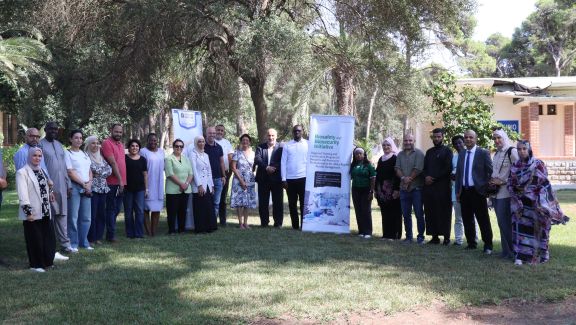
Held from 13–17 September 2026 at the Institut Pasteur d’Algérie in Algiers, the training was hosted by IPA, the Africa CDC Regional Centre of Excellence for Biosafety and Biosecurity (RCoEBB) for Northern Africa. Participants came from Algeria, Morocco, Tunisia, Egypt, Libya, Mauritania and the Sahrawi Republic, representing medical and public health laboratories, research institutions, emergency medicine, national reference laboratories and laboratory management functions.
The training contributes to Africa CDC’s Biosafety and Biosecurity Initiative and the Regional Training and Certification Program for Biosafety and Biosecurity Professionals (RTCP-BBP), which seek to strengthen Africa’s biosafety and biosecurity capacity by developing a competent and certified workforce in biorisk management.
The programme focused on strengthening participants’ understanding of biorisk management principles, risk assessment and mitigation, biosafety and biosecurity practices, collaboration among Member States and progression through the BRM certification pathway.
Over five days, participants covered BRM orientation, legal requirements, biological risk assessment, risk mitigation strategies, packaging and transport of dangerous biological materials, laboratory biosecurity, bioethics and dual-use research of concern.
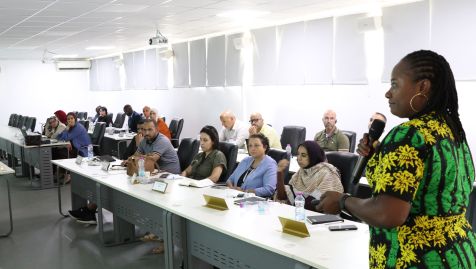
The training used a competency-oriented and practice-based approach, combining interactive lectures, group discussions, case studies, real-life scenarios, scenario-based learning, daily recap sessions and practical demonstrations. A practical exercise using UV light and fluorescent material was used to demonstrate proper glove removal and help participants visualize contamination risks and reinforce biosafety practices.
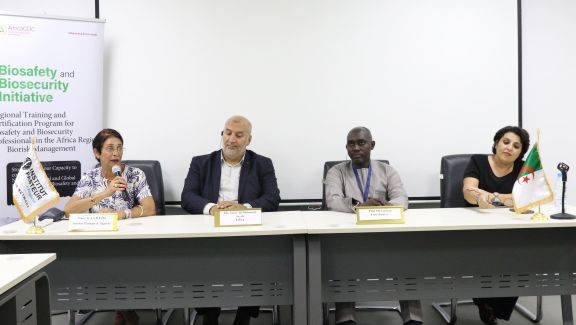
In opening remarks, Professor Bouzeghoub Salima, representing the Director General of the Institut Pasteur d’Algérie, welcomed participants to Algiers and highlighted IPA’s continued commitment to providing high-quality regional capacity-building services in biosafety, biosecurity and biorisk management in collaboration with Africa CDC.
Representing Africa CDC, Paul Okwalinga, Technical Officer for Biosafety and Biosecurity, emphasized the importance of a competent and sustainable biosafety and biosecurity workforce in strengthening laboratory systems and health security across the continent. He also underscored the value of standardized, competency-based training and regional collaboration, with IPA serving as a regional hub for Northern Africa.
The training also provided an opportunity for participants to share experiences from their respective laboratory and institutional settings and discuss practical challenges in applying biorisk management principles. Particular attention was given to the safe transport of biological materials and how risk-based principles can be applied in routine laboratory work.
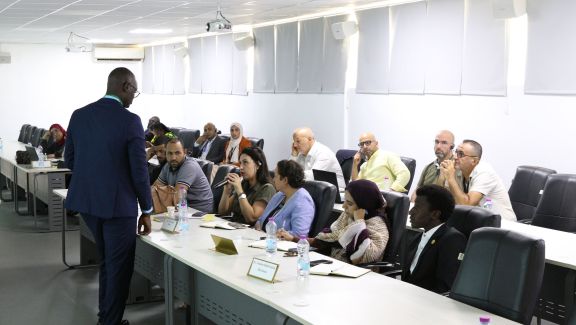
All 15 participants completed the Level 1 certification examination at the end of the training, providing a basis for continued professional development and progression within the Africa CDC Regional Training and Certification Program. The training also strengthened regional collaboration and reinforced the role of the IPA RCoEBB as a platform for sustainable biosafety and biosecurity workforce development.
Participant feedback highlighted the value of the interactive and practical approach. The overall training experience received a mean rating of 4.07 out of 5, while achievement of training objectives and practical exercises each received a mean score of 4.21 out of 5. In addition, 85.7% of respondents rated the practical activities 4 or 5 out of 5.
The training also identified opportunities to further strengthen future delivery, including additional time for practical exercises and revision, technical and linguistic review of French training materials, progressive development of key resources in Arabic, and continued strengthening of practical BRM components.
The collaboration between Africa CDC, ASLM and IPA demonstrates the importance of regional platforms and competency-based training in building a sustainable biosafety and biosecurity workforce. IPA’s continued role as the Regional Centre of Excellence for Biosafety and Biosecurity for Northern Africa provides a foundation for sustained capacity development and professional collaboration across the region.