
March 24 2026
Between 25%-36% of biomedical and general healthcare waste is made of plastic and this translates to a global projection of about 15 million tons of plastic waste generated annually.
Single-use plastic devices lend themselves to the triple burden of environmental harm, operational inefficiencies, and financial burdens, despite their role in ensuring safety and sterility.
Understanding and quantifying the amount and type of plastics in diagnostic materials can help medical labs in managing their plastic waste effectively through reducing consumption, reusing safe items, recycling non-contaminated plastics, and segregating biohazardous waste for proper decontamination.
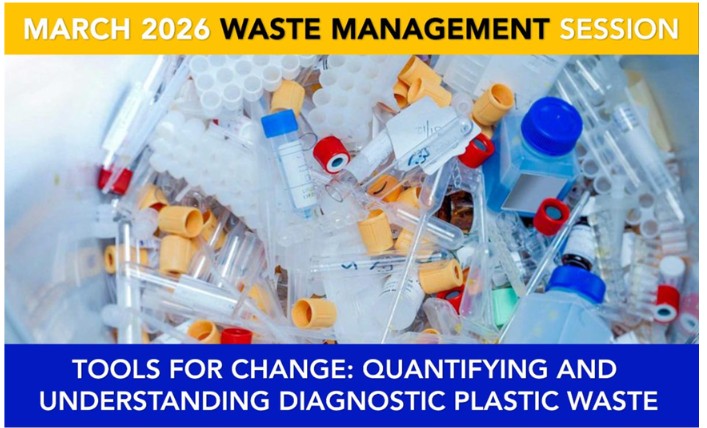
In this session presented by Prof. Alice Street, a Professor of Anthropology and Health and Prof. Maïwenn Kersaudy-Kerhoas, a Professor of Microfluidic Engineering, Heriot-Watt University, Edinburgh, UK, we explore the types of materials used in diagnostic tests, quantities of plastic waste generated from some lateral flow assays, current approaches and tools used in quantifying plastic waste, and the implications of diagnostic waste data for laboratories, policy-makers, and engineers.
Please follow the links below to view the session recordings and download presentation slides