
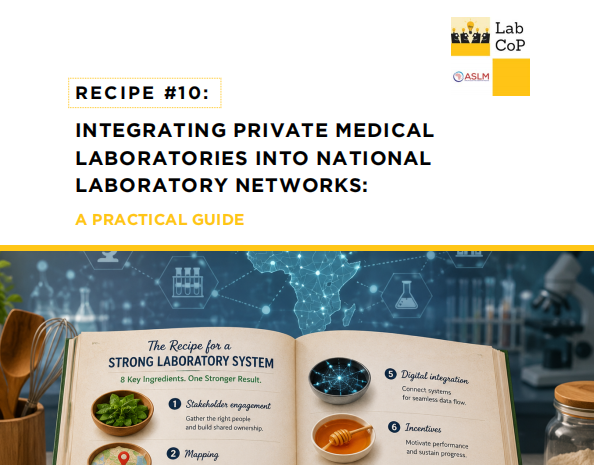
The integration of private medical laboratories into national laboratory networks is critical for achieving diagnostic equity, strengthening pandemic Preparedness, and advancing global health security. In many low- and middle-income countries (LMICs), private laboratories comprise a significant proportion of diagnostic capacity, yet they remain excluded from national systems that govern disease surveillance, quality oversight, and health data reporting.1-3 This gap results in missed opportunities for real-time outbreak detection, leads to fragmented responses and duplicative testing, and contributes to inequitable access to timely diagnostics.
The effective integration of medical laboratories promotes real-time data sharing, reduces the time from sample submission to the return of test results, and ensures the accuracy and consistency of tests. For example, integrated laboratory information systems (LISs) in Uganda have substantially reduced diagnostic turnaround times through electronic results dispatch and workflow optimisation.4, 5 At a global level, harmonised public-private response strategies have increased TB case detection by two- to four-fold in several settings.6 Moreover, integrating private laboratories with national laboratory networks supports compliance with International Health Regulations by ensuring all diagnostic providers contribute to core surveillance capacities.7 It also underpins universal health coverage by broadening access to quality-assured diagnostics,8 particularly in underserved urban and peri-urban areas where private laboratories are concentrated.
The integration of private and national laboratories is also vital to ensure compliance with regulatory, quality assurance, and data-reporting standards. Without integration, the oversight of private medical laboratories often remains minimal or fragmented. National laboratory directorates typically have limited visibility over private diagnostic operations, with engagement occurring mainly through initial licensing or periodic registration managed by professional councils or regulatory authorities. Once licensed, many private laboratories operate outside the quality assurance, surveillance, and data-reporting frameworks that govern public facilities. This regulatory gap means that laboratory directorates cannot systematically monitor test quality, diagnostic coverage, or compliance with national disease-reporting obligations. As a result, a substantial proportion of the diagnostic data generated in the private sector never reaches national health information systems, constraining situational awareness, outbreak detection, and evidence-based planning. These gaps could be addressed by mandating that private laboratories submit and report data to national laboratory networks and comply with supervision and quality monitoring.