
July 29, 2026, Addis Ababa, Ethiopia – The Africa Centres for Disease Control and Prevention (Africa CDC), the African Society for Laboratory Medicine (ASLM), and the European Union have officially launched the “Wastewater Molecular and Genomic Surveillance in African Megacities (WASTEWISE)” Project, a three-year initiative that will strengthen wastewater and environmental surveillance (WES) as an integrated early warning system for epidemic-prone diseases across Africa. The project, implemented in collaboration with the European Commission’s Health Emergency Preparedness and Response Authority (HERA), the European Health and Digital Executive Agency (HaDEA), and other strategic partners, will be piloted in Ethiopia, the Democratic Republic of the Congo (DRC), and Kenya, marking a significant milestone in Africa’s transition towards proactive, integrated disease surveillance.
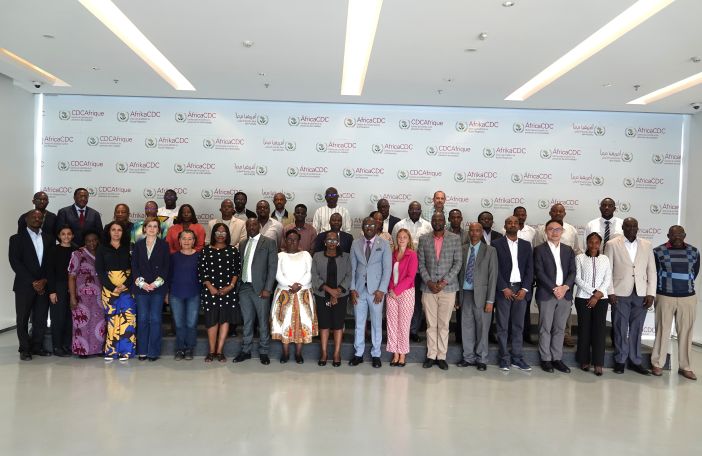
Participants at the Meeting on the Hub-and-Spoke Model Terms of Reference and the WASTEWISE Kick-Off Meeting and Inception Workshop, held at the Africa CDC Headquarters, Addis Ababa, Ethiopia. The meeting marked the launch of a coordinated continental effort to strengthen wastewater and environmental surveillance capacity across Africa through partnerships, knowledge exchange, and collaborative implementation.
The project was launched at the Africa CDC Headquarters in Addis Ababa, Ethiopia, which brought together more than 40 participants, both in-person and hybrid, including representatives from national public health institutes, national reference laboratories, research institutions, regional and international organisations, technical partners, and implementing institutions to advance collaboration on WES across Africa.
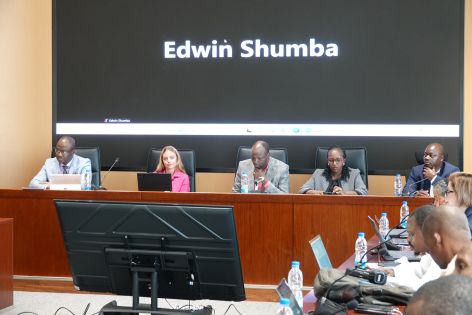
The launch of WASTEWISE marks a significant milestone in Africa’s public health journey, building on the continent’s remarkable progress in pathogen genomics to advance WES as a core pillar of epidemic preparedness. Since the establishment of the Africa Pathogen Genomics Initiative (Africa PGI), countries have expanded sequencing capacity, strengthened laboratory systems and developed regional networks that now support large-scale surveillance for multiple priority pathogens. Speaking on behalf of Africa CDC, Dr Yenew Kebede, Ag. Director of the Centre for Laboratory Diagnostics and Systems (CLDS), said: “Surveillance that waits for patients to reach a clinic will always tell the story too late. A single wastewater sample can reflect the health of tens of thousands of people and signal a threat weeks before the first case presents. Through WASTEWISE, we are linking wastewater surveillance to the genomics and bioinformatics capacity established across the African Union Member States through the Africa PGI. This enables us to detect not only that a pathogen is circulating, but also which lineage it belongs to and which antimicrobial resistance markers it carries. In this way, African-generated data drives African public health decisions.” On his part, Dr. Merawi Aragaw, Head of Surveillance and Disease Intelligence emphasized the need to leverage existing investments through a shared commitment among partners. He noted that the initiative will adopt a hub-and-spoke model to establish a scalable WES intelligence system that can be replicated across the continent.
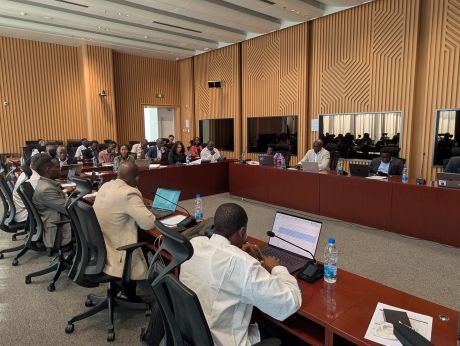
WES is becoming a cornerstone of Africa’s public health architecture. “As Africa strengthens its genomic surveillance capacity, WES offers an unprecedented opportunity to detect pathogens early, monitor transmission at the community level, and generate the intelligence needed for faster, more effective public health decisions”, emphasized Mr. Nqobile Ndlovu, ASLM CEO. Dr. Angela Tessarolo, Policy Officer at EU HERA, described WASTEWISE as one of the flagship investments in the Africa-European Union partnership, translating a shared commitment to building stronger, more resilient health security systems. She emphasized that in an increasingly interconnected world, where pathogens cross borders with ease, sustainable investments must prioritize long-term preparedness alongside emergency response by strengthening the surveillance capacities that enable countries to detect, anticipate, and prevent future health threats. Representatives from UNEP, WHO Regional Office for Africa, and the Association of Public Health Laboratories (APHL) stressed that regional collaboration will ensure that WES becomes a routine component of public health surveillance, thereby strengthening Africa’s preparedness for future epidemics and pandemics.
The deliberations called for Member States and partners to build on the momentum generated by the Africa CDC and its partners, and ensure that WES becomes an integral component of national public health systems. Realizing the full potentials of WASTEWISE will require strong partnerships, regional collaboration, and, above all, country ownership, as it represents a strategic investment in Africa’s future health security. Member States and strategic partners were encouraged to leverage existing resources and capacities, integrate WES into routine public health programmes, and work collectively to build a continent-wide early warning system capable of protecting communities from future health threats.
Acknowledgments: Support and Coordination
The meeting is coordinated through Africa CDC’s WASTEWISE Project, implemented under the EU4Health program by the European Health and Digital Executive Agency (HaDEA) and the Health Emergency Preparedness and Response Authority (HERA) (Project 101307608). Both the kick-off meeting and the inception workshop were financed by Africa CDC under budget code CDC100612MB (Fund: PB-CEPI01). The project will be implemented in collaboration with ASLM.