
ARILAC Initiative Set to Strengthen Africa’s Fight Against Antimicrobial Resistance
Nuru Ngailo l ASLM
Antimicrobial resistance (AMR) is one of the fastest-growing threats to public health worldwide, making common infections harder and sometimes impossible to treat. Across Africa, limited access to quality microbiology testing means that many clinicians are forced to prescribe antibiotics without the laboratory evidence needed to guide treatment, contributing to the growing challenge of drug resistance.
To help address this gap, Africa CDC, the African Society for Laboratory Medicine (ASLM), and the European Union have launched the Advancing Regional Integrated Laboratory Capacity for AMR Control (ARILAC) initiative, a four-year programme designed to strengthen laboratory systems and AMR surveillance across the continent.
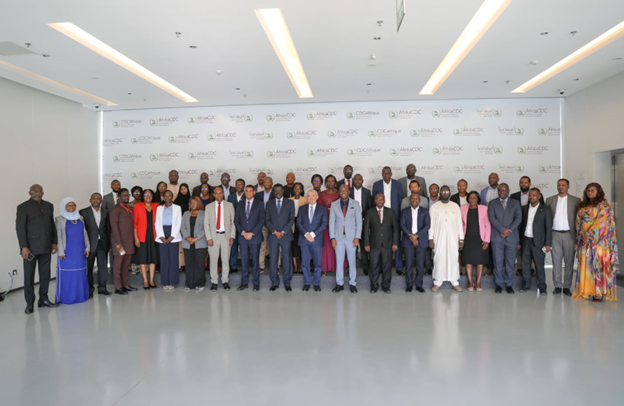
Launched in Addis Ababa, Ethiopia, the initiative brings together governments, laboratory experts, and development partners around a shared goal: ensuring countries have the laboratory capacity needed to detect, monitor, and respond to antimicrobial resistance before it becomes an even greater threat to health systems and communities.
The programme will support eight African Union Member States – Cameroon, Chad, Ethiopia, Gabon, Mozambique, Sierra Leone, Uganda, and Zimbabwe by strengthening microbiology laboratories, expanding AMR surveillance, and improving collaboration between human and animal health sectors through a One Health approach.
Recent assessments by Africa CDC and ASLM highlighted a critical challenge: only a small number of laboratories routinely perform bacteriological testing for priority AMR pathogens. As a result, millions of people across the continent have limited access to the diagnostic services needed for accurate treatment and effective disease surveillance.
ARILAC aims to change that. Over the next four years, the initiative will support laboratories to improve quality management systems, modernise equipment, strengthen workforce skills, expand genomic surveillance, and improve the collection and use of laboratory data. The programme will also help countries build stronger laboratory networks and increase access to modern microbiology technologies capable of generating timely and reliable AMR data.
Importantly, ARILAC goes beyond infrastructure investments. The initiative places strong emphasis on sustainability, encouraging countries to integrate project-supported activities into national health plans and budgets to ensure gains continue long after the programme concludes.
As antimicrobial resistance continues to threaten progress in healthcare, initiatives such as ARILAC are helping build the laboratory foundations needed for timely diagnosis, evidence-based treatment, and stronger disease surveillance. By investing in laboratory systems today, Africa is strengthening its ability to respond not only to AMR, but also to future public health threats.