
Nuru Ngailo ASLM,
At the Global Health Security Conference (GHS 2026) in Kuala Lumpur, Africa CDC, in collaboration with ASLM, unveiled the 2026–2030 Biosafety and Biosecurity Initiative (BBI) Strategy, a five-year roadmap designed to strengthen national systems, expand workforce capacity, and improve preparedness for biological threats across the continent.
The launch provided an opportunity to reflect on the progress achieved since the first continental strategy was introduced in 2021. According to Zibuziso Masuku, Programme Lead for Biosafety and Biosecurity at Africa CDC, the past five years have laid a strong foundation for future growth.
Since 2022, more than 650 professionals have been trained and certified through the continental programme, while five regional Biosafety and Biosecurity Technical Working Groups and regional Centres of Excellence have been established to support countries in strengthening their capacities.
“The first phase was about building the foundation. The next phase is about scaling impact, strengthening national ownership, and ensuring sustainability,” said Masuku.
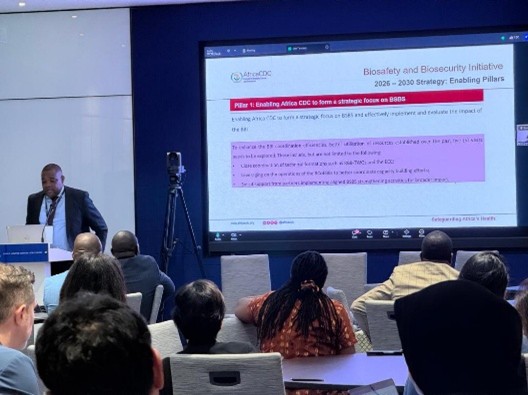
The new strategy shifts the focus from building systems to ensuring they are fully integrated, sustainable, and country-owned. It outlines seven priority areas, including governance and coordination, workforce development, laboratory systems, legal and regulatory frameworks, partnerships, innovation, and sustainable financing. It also addresses emerging challenges such as cyber-biosecurity, artificial intelligence, and advances in biotechnology.
For ASLM, the ultimate goal extends beyond training programmes and institutional structures.
“Success is not just about how many people we train or how many centres we establish,” said Dr. Talkmore Maruta, ASLM Director of Programmes. “The real measure is whether countries are able to use these capacities to prevent, detect, and respond to biological threats.”
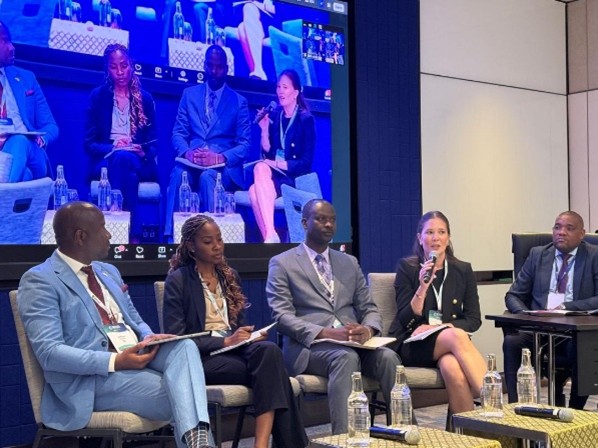
A panel discussion featuring global and regional biosafety leaders reinforced a central message throughout the session: sustainable progress depends on stronger national ownership.
While development partners have played a critical role in supporting biosafety and biosecurity efforts, speakers emphasized that countries must increasingly invest in their own systems to ensure long-term resilience.
“Preparedness is always less expensive than response,” noted Nathalie Charbonneau, Director of the Weapons Threat Reduction Program at Global Affairs Canada. “Investing in biosafety and biosecurity today helps countries avoid much greater costs tomorrow.”
Panelists also highlighted the importance of strong governance structures, effective legislation, and national biosafety committees to support implementation and accountability.
Dr. Andrew Kibuuka, Chair of the East Africa Biosafety and Biosecurity Technical Working Group, underscored the value of involving practitioners in shaping solutions.
“The people doing the work must be part of designing the solutions,” he said. “Technical working groups have succeeded because they bring together practitioners who understand the realities on the ground.”
Echoing the need for strong governance, Dr. Anne-Mari Venter, Chair of the Southern Africa Biosafety and Biosecurity Technical Working Group, stressed that lasting progress requires more than technical expertise alone.
“Without appropriate legislation, governance structures and accountability mechanisms, it becomes difficult to sustain progress and secure long-term investment,” she said.
As Africa continues to face emerging infectious diseases, laboratory-associated risks, and other biological threats, the new strategy signals a shift from building regional momentum to strengthening national systems. The next five years will focus on ensuring that the capacities established across the continent translate into practical, sustainable actions that protect communities and strengthen health security for the future.