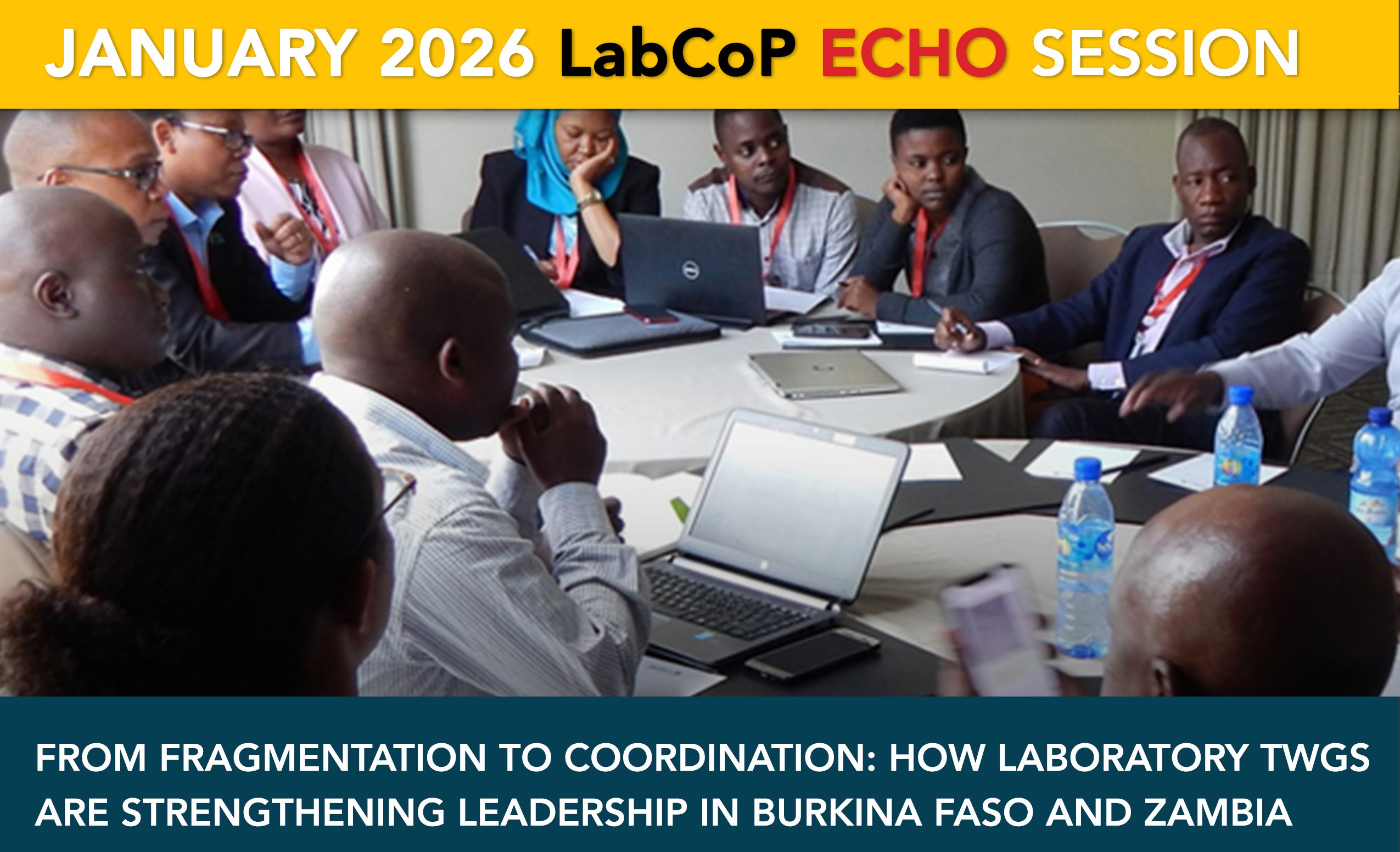
The LabCoP ECHO session on Thursday, 15th January 2026 briefing highlights widespread coordination and leadership challenges faced by National Laboratory Directorates across Africa—such as fragmented governance, unclear mandates, and donor‑driven vertical programs—and positions laboratory TWGs as critical structures for strengthening national planning and decision‑making. The experiences of Zambia and Burkina Faso illustrate how TWGs can overcome these systemic weaknesses by providing structured leadership, defined roles, and regular meeting cycles that drive alignment across programs and sectors. Zambia’s TWG, guided by formal TORs and supported by a dedicated secretariat, meets routinely to harmonize national laboratory policies, evaluate diagnostics, integrate provincial input, and track follow‑up actions. Burkina Faso’s SITEB TWG similarly convenes quarterly under a One Health framework to guide the national sample transport system, review performance data, validate SOPs and tools, and coordinate actors from human, animal, and environmental health sectors.
Despite differing contexts, both TWGs rely on structured processes and evidence‑based oversight to monitor progress and maintain national coherence. Zambia sustains its TWG primarily through partner support and cost‑saving virtual engagement due to the absence of a dedicated budget. Burkina Faso’s SITEB TWG secures funding through active resource mobilization, advocacy, and donor coordination to support national transport operations, training, and system improvements. Together, these examples underscore the role of TWGs in enhancing laboratory governance and strengthening national health systems—providing practical, country‑led solutions to the leadership and coordination gaps outlined in the LabCoP session resource.
Moderator: Dr Lucy Mupfumi, ASLM
Presenter
• Mr Issa Sogoli, Medical Biologist, Ministry of Health, Burkina Faso
• Ms. Mutinta Shisholeka, National QMS coordinator, Ministry of Health, Zambia