
By Nqobile Ndlovu
LabVoice Issue 02
The beginning of 2025 will be remembered as a pivotal moment that redefined global public health support. It marked a turning point – calling for a reset and new ways of thinking to address the emerging shift away from global support for public health programmes. For many organisations, including ASLM, this shift created immense challenges in addressing existing and future public health problems, as the global funding envelope took a deep dive. Amidst this crisis, organisations had to adapt and re-adjust in order to continue to serve their missions. ASLM also adapted – but remained true to our vision of ensuring “A healthier Africa through access to quality laboratory services for all”.
In 2025, despite the emerging challenges, ASLM made substantial progress toward its overall mission to strengthen laboratory systems, diagnostics leadership, workforce capacity, and quality assurance across Africa. ASLM remains proud that our trajectory is still trending upwards – with over 1,300 laboratories strengthened via quality assessments, proficiency testing, training and accreditation efforts. Our workforce development programs have seen over 3,500 professionals trained in areas such as AMR, genomics, laboratory quality, biosafety and diagnostics. Throughout 2025, ASLM delivered regional and in-country training and provided targeted technical support to national laboratory systems. The launch of the ASLM Ambassador Program – a strategic outreach and advocacy initiative – seeks to expand ASLM’s visibility, engagement, and impact across Africa and globally. The programme forms part of ASLM’s broader efforts to strengthen laboratory systems by building networks of influential advocates who promote the organisation’s mission and activities.
In response to the decline in donor funding, ASLM developed the “Minimum Package for Sustainable Laboratory Systems,” – a blueprint for resilient laboratory services that supports African countries to prioritise investments in their laboratory systems. To further develop capacity to address these challenging times, ASLM partnered with Roche Diagnostics Africa to launch the Leadership Excellence for African Diagnostics (LEAD) programme, a three-year initiative focused on strengthening leadership competencies among African laboratory professionals. The programme includes leadership assessments, mentorship, peer learning, and regional collaboration workshops to build resilient diagnostic leadership across the continent.
In collaboration with Africa CDC and the Mastercard Foundation, the Pathogen Genomics Initiative Phase II was launched to bolster genomic surveillance and bioinformatics, strengthening Africa’s pandemic preparedness and response capacities. Under the Saving Lives and Livelihood (SLL) initiative, this work ensures countries can detect, monitor, respond rapidly to infectious diseases and health emergencies. At the close of 2025, our initiative delivered measurable results: tangible infrastructure was established, including eight regional biobanking hubs and support for local vaccine production with SAHPRA; our workforce development culminated in 171 professionals from 35 nations transformed into genomic sentinels; and our commitment to quality culminated in 577 labs achieving a 92.5% pass rate in external PCR quality assurance. These figures represent the concrete foundation of a new, self-reliant health future for the continent.
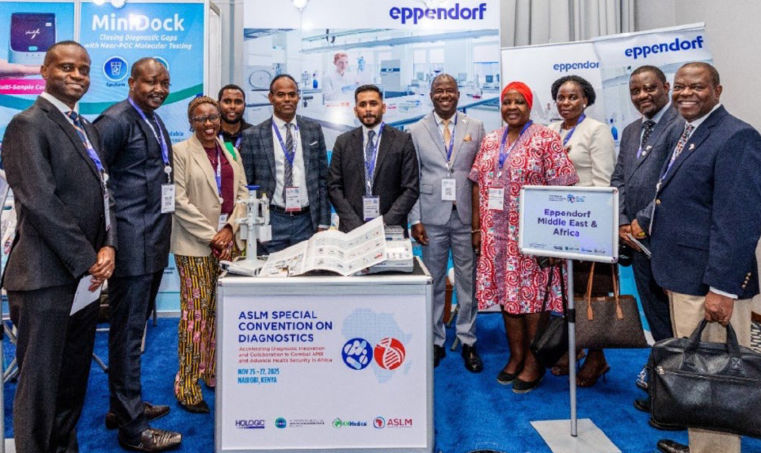
ASLM also hosted two major regional meetings addressing emerging issues due to the shifting global funding landscape. The 8th Laboratory Strengthening Community of Practice (LabCoP) meeting held 22–24 October 2025 in Nairobi centred on strengthening laboratory systems and networks, with a particular emphasis on sustaining gains made in laboratory capacity, improving data use for action, and promoting peer exchange on innovations and best practices. The ASLM 2025 Diagnostic Convention “Accelerating Diagnostic Innovation and Collaboration to Combat AMR and Advance Health Security in Africa” brought together over 350 delegates including policymakers, industry partners, scientists, and health leaders. The convention discussed challenges in diagnostics, AMR, health security, and national diagnostics strategies—advocating for greater investment and action at country level.
Our engagement with stakeholders and communities took an innovative approach as ASLM launched its first podcast, sharing insights from thought leaders and practitioners. Additionally, ASLM cultivated new strategic partnerships, including participation in the Unitaid funded PATH led consortium on Manufacturing to Accelerate Diagnostic Excellence (MADE) in Africa project, which forms part of Unitaid’s Regional Manufacturing for Equitable Access portfolio. ASLM also launched our Corporate Membership program – welcoming 4 Corporate Members (Roche, Informa, Hologic, Molbio) during its inaugural year. The membership program offers a unique opportunity for private sector partners to work alongside ASLM and our vast networks to collectively advance innovations, strengthen laboratory diagnostics, and elevate African laboratory priorities on a global stage.
Despite a challenging start, 2025 ended on a positive note reflecting all the organisation accomplished, even during these tumultuous times. We were also very excited to welcome new ASLM Board members: Dr Judith Shang (Cameroon), Prof Placide Mbala (DRC), Mr Davy Nsama (Zambia), Dr Christina Mwangi (Kenya), Ms Bridget Mohale (South Africa).
Looking into 2026, ASLM will continue to be at the forefront of addressing critical diagnostic access issues. One major area of focus is making an investment case for diagnostics. This will ensure prioritizing diagnostics in funding agendas, guiding policymakers, donors, and stakeholders toward evidence-based diagnostics reforms that strengthen health systems, safeguard livelihoods, and reduce costs. To facilitate this, we are thrilled to host the ASLM 2026 Conference in Cape Town, South Africa. This is not an event to miss and we look forward to seeing you there!