
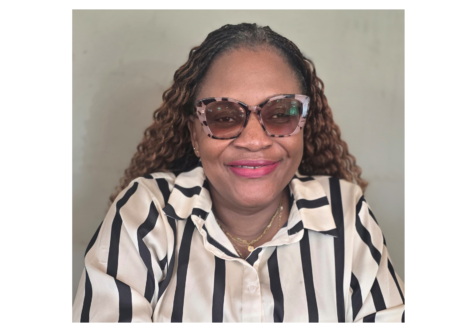
The LabCoP management team recently asked Sandra Chipuka (MPH), Acting National HIV Program Laboratory Coordinator, Ministry of Health and Child Care, AIDS and TB Unit to discuss the Critical Role of CD4 Testing and Decentralized Diagnostic in Resource-Limited Settings
ASLM: Why does Advanced HIV Disease (AHD) remain a major public health challenge despite expanded ART access?
Sandra: PLHIV continue to present late for care hence about a quarter of all newly tested HIV Positive clients in Zimbabwe have AHD. We also continue to see ART clients defaulting with 2% of our ART population interrupting ART for at least 90 days and 25% of them returning to care with AHD.
ASLM: Why is CD4 testing still essential in the era of universal ART and viral load monitoring?
Sandra: CD4 testing remains critical to ensure accurate and early identification of AHD in PLHIV. CD4 testing is no longer used for monitoring treatment efficacy but is now a means to identify AHD and ensure PLHIV are subsequently screened for OIs prior to ART initiation or re initiation to avoid IRIS which leads to high morbidity and mortality
ASLM: How has point-of-care CD4 testing transformed AHD identification in decentralized settings?
Sandra: This has been a game changer in accurate diagnosis of AHD, in the absence of POC, CD4 testing would have to be centralised in the lab and access issues become an issue. Despite a robust IST system, not all facilities get a biker daily and given the fragile nature of the CD4 sample this option would not work as some of our RoC travel long distances to get to the facility and asking them to return on a later date for bleeding and results on a different date would be too much to ask for.
ASLM: How can countries ensure quality and competency in decentralized CD4 testing?
Sandra: Training, retraining, continuous support and mentorship of both laboratory and clinical staff. Availing IQC and EQA would also go a long way in improving quality of testing.
ASLM: How can countries build sustainable capacity for AHD diagnostics beyond donor-funded projects?
Sandra: Domestic funding, potentially cost recovery measures where if possible RoC can pay a minimal charge for the services.
ASLM: If you could recommend one priority action for Ministries of Health, what would it be?
Sandra: Avail domestic funding, reduce staff attrition through improving conditions of service to ensure testing capacity at all facilities. Strengthen HIV self-testing for early identification and ART initiation to improve outcomes