
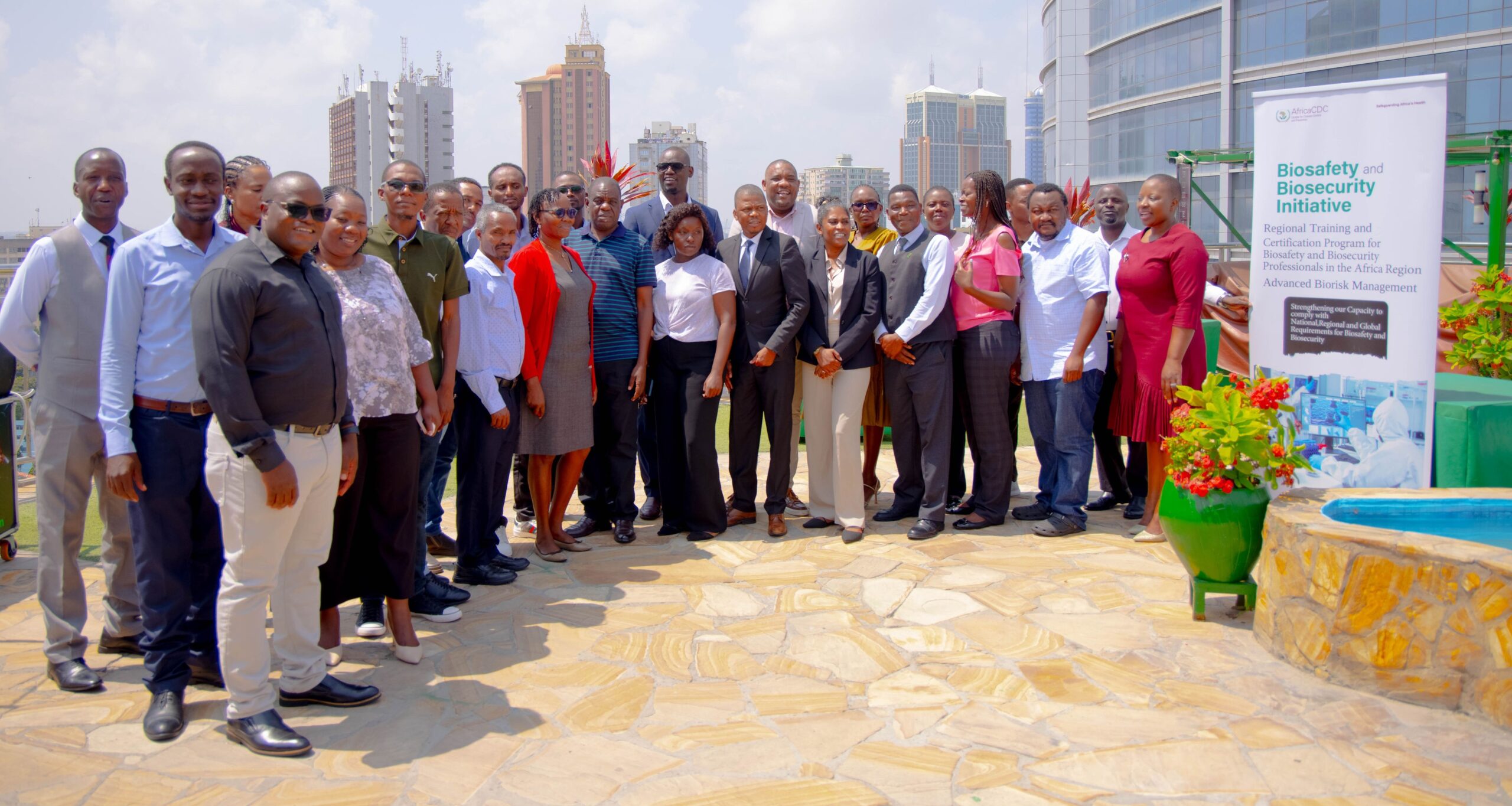
16th – 20th March 2026, Dar es Salaam, Tanzania, 57 experts from across Central Africa have convened at the Regional Centre of Excellence for Biosafety and Biosecurity – East Africa, hosted by the National Public Health Laboratory to strengthen capacity in biosafety and biosecurity
The participants, representing ten (10) countries, i.e nine (9) countries from Central Africa Region—Burundi, Cameroon, Chad, Gabon, Equatorial Guinea, Republic of Congo, Democratic Republic of Congo, Central African Republic, and São Tomé and Príncipe and one (1) country from Eastern Region -the host, Tanzania —are taking part in three (3) specialized training programs:
- Advanced Biorisk Management – Level 1
- Biorisk Management – Level 1
- Biological Waste Management – Level 1
The Advanced BRM course has twenty-three (23) participants who are BRM Level 1 – Certified Professionals, representing three regions in Africa. Five (5) participants are from Eastern Africa—Ethiopia, Kenya, Seychelles, Tanzania, and Uganda; four (4) are from Southern Africa—Botswana, Lesotho, Zambia, and Zimbabwe; and two (2) are from Western Africa—Burkina Faso and Ghana.
In addition, the Biorisk Management Level 1 course has sixteen (16) participants, while the Biological Waste Management Level 1 course has eighteen (18) participants.
These trainings aim to address critical gaps in biosafety and biosecurity by equipping professionals with practical skills in risk mitigation, safe laboratory practices, and bio-waste management, while also fostering regional collaboration and knowledge exchange.
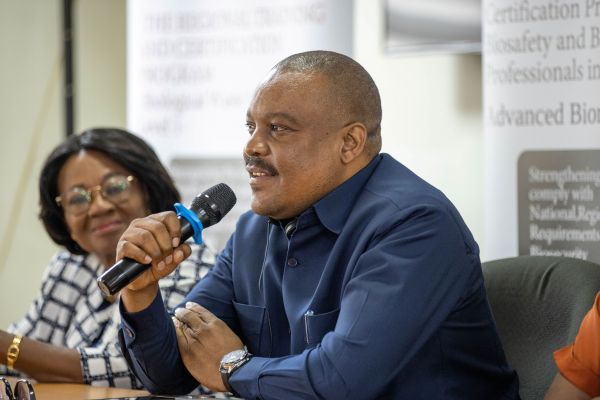
Delivering the keynote address on behalf of the Director of the National Public Health Laboratory, which is the Regional Centre of Excellence for Biosafety and Biosecurity (RCoEBB) Athuman Masesa, Human Resource Manager, welcomed participants and underscored the importance of regional cooperation.
During the opening session that was held for the two (2) Level 1 courses, Mr. Masesa continued to remark that “I recognize the representatives of the nine countries from the Central Africa region. Your presence here reflects a strong regional commitment to strengthening laboratory systems and improving biosafety and biosecurity practices,” he said.
He further expressed appreciation to Africa CDC for its continued partnership and technical support, highlighting the collaboration with the Ministry of Health as a demonstration of shared commitment toward global health security and sustainable impact.
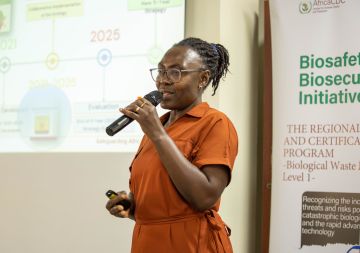
Speaking at the event, Idosie Kenfack, Biosafety and Biosecurity Technical Officer at Africa CDC, emphasized the importance of collective action in achieving a safer and more secure Africa. She commended Tanzania’s National Public Health Laboratory, the RCoEBB for Eastern Africa, for hosting the training and encouraged participants to actively learn from one another as Central Africa advances efforts to establish its own Centre of Excellence.
The trainings are being conducted under the ASLM Academy, with support from the Examination and Certification Committee (ECC). Participants will undergo formal assessments at the end of the week to validate their competencies.
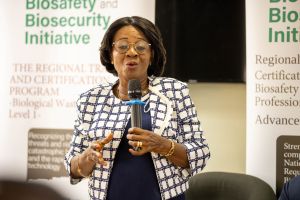
In her remarks, Comfort Nyameba Opoku, Second Vice Chairperson -ECC, highlighted the role of the ECC in maintaining integrity and professionalism in the certification process, noting that the collaboration with ASLM Academy ensures rigorous standards in participant evaluation.
The Regional Training and Certification Program for Biosafety and Biosecurity Professionals (RTCP-BBP) was developed in response to limited capacity among African Union Member States to meet national, regional, and international biosafety and biosecurity requirements. In 2019, Africa CDC launched the Biosafety and Biosecurity Initiative to address these gaps.
The initiative focuses on four key domains:
- Biorisk Management
- Biological Waste Management
- Selection, Installation, Maintenance and Certification of Biological Safety Cabinets (BSC Certification)
- Management and Maintenance of Facilities Handling High Risk Pathogens (Biocontainment Engineering
Biorisk management remains a critical component in ensuring the safe handling and containment of biological materials and infectious agents. Strengthening these practices is essential for preventing and controlling the spread of infectious diseases—particularly in Africa, where public health systems face complex and evolving challenges.
Recognizing the urgency of building sustainable capacity, Africa CDC, in collaboration with ASLM supported by the UK and Canada Governements under the Simba Initiative continues to invest in training programs that empower professionals to safeguard laboratories and communities across the continent.