
Advanced HIV Disease (AHD) remains a major contributor to HIV-related morbidity and mortality in sub-Saharan Africa. According to WHO guidelines, individuals living with HIV with a CD4 count below 200 cells/μL are classified as having AHD and are at high risk for opportunistic infections such as tuberculosis (TB) and cryptococcal disease. Timely CD4 testing, alongside TB and cryptococcal screening, is critical for early identification and management of these patients. However, limited access to point-of-care diagnostics and insufficient workforce capacity continue to hinder effective AHD care in many decentralized and resource-limited settings.
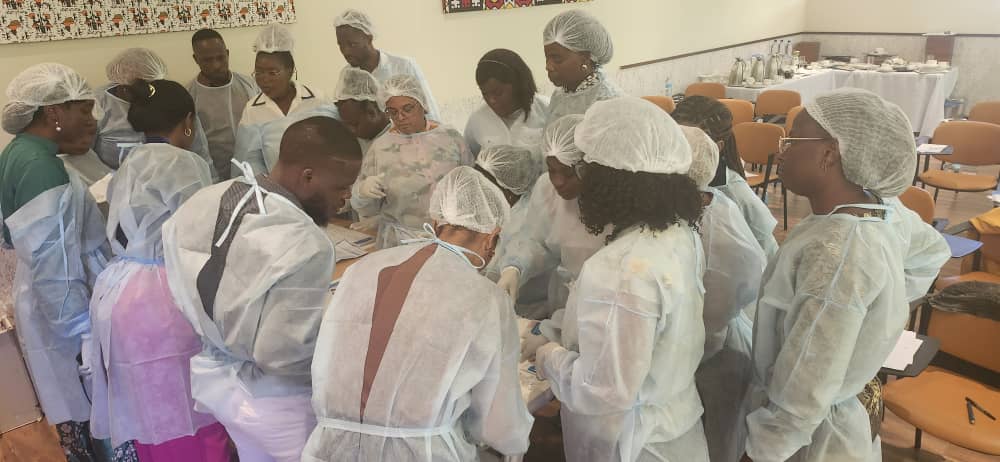
To address this gap, the African Society for Laboratory Medicine (ASLM), with funding from the Gates Foundation and in collaboration with AccuBio Ltd and Smart Spot Quality, is implementing a six-month Advanced HIV Disease Package Training Project (September 2025–March 2026). The project supports 11 African countries—Angola, Cameroon, Côte d’Ivoire, Ghana, Kenya, Liberia, Malawi, Sierra Leone, Tanzania, Togo, and Zimbabwe—under the leadership of Ministries of Health, National AIDS Control Programs, and National Laboratory Directorates. The project aims to strengthen hands-on capacity of healthcare workers (HCWs) to perform VISITECT® CD4 point-of-care testing, TB-LAM, and Cryptococcal Antigen (CrAg) rapid diagnostic tests for improved AHD identification and management.
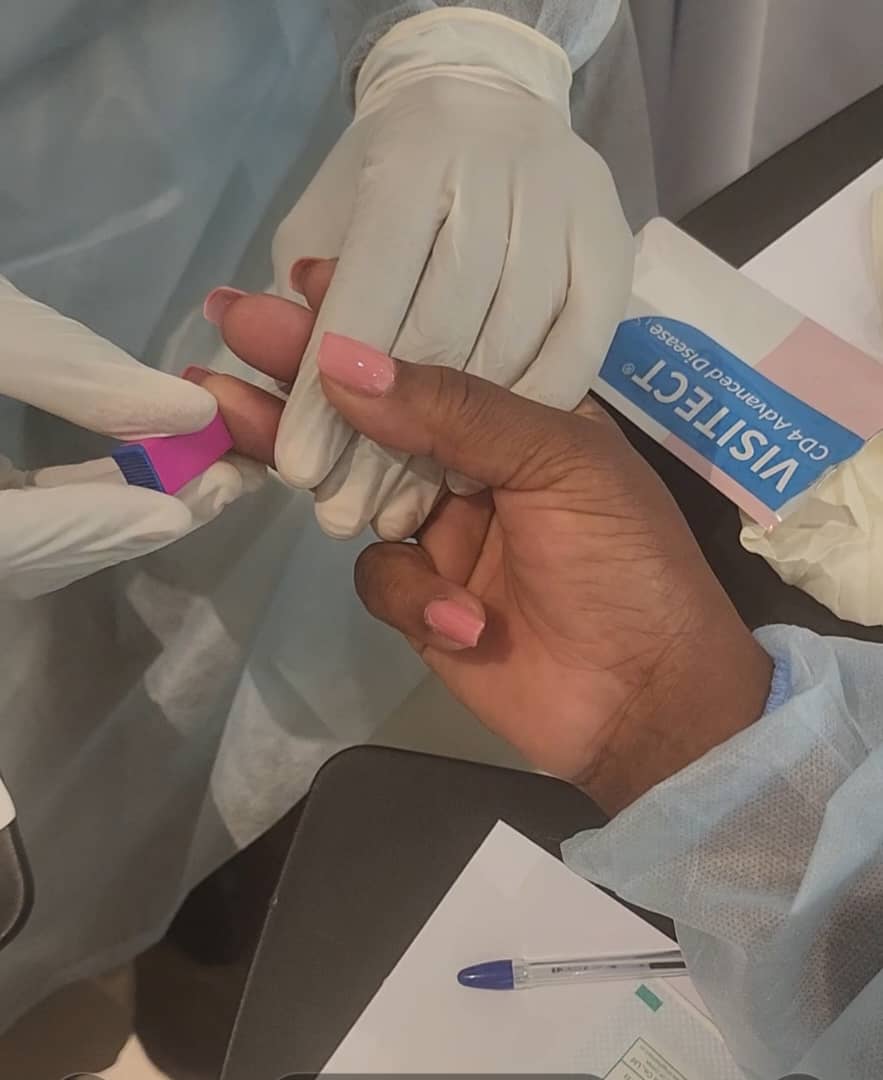
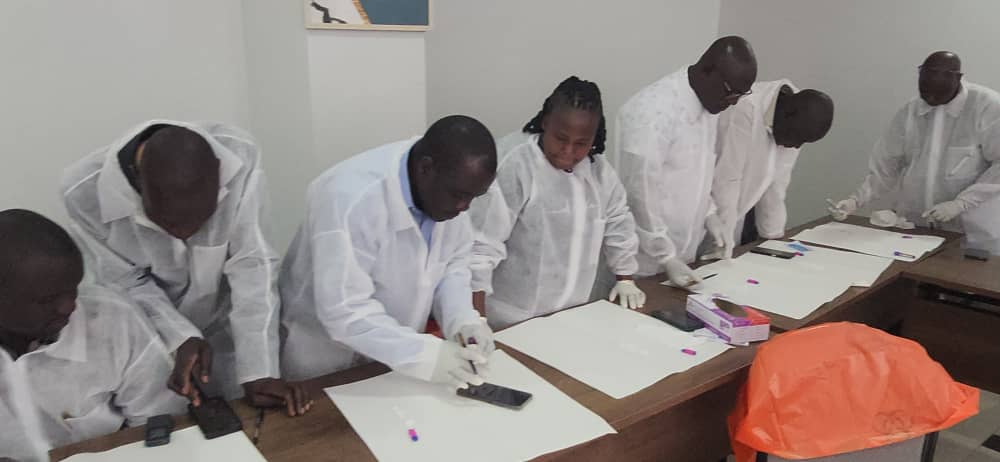
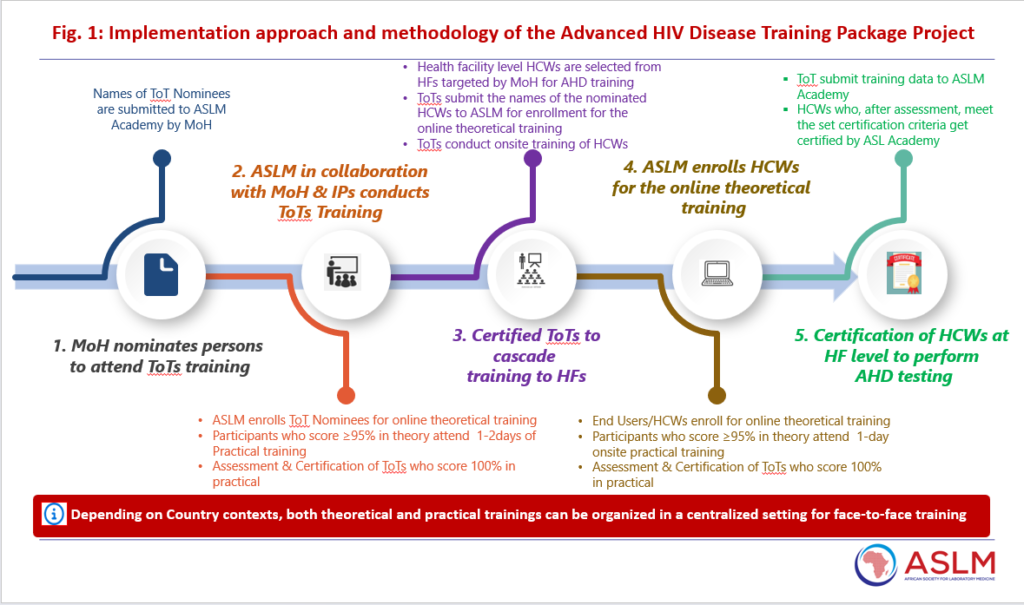
Implementation follows a phased Training-of-Trainers (ToT) cascade model. In Phase One, ASLM Academy conducts national and regional ToT workshops to equip selected trainers with the skills and competencies to deliver high-quality AHD diagnostic training. Trainees are nominated by Ministries of Health and are expected to have prior experience in HIV/TB rapid diagnostic testing, quality improvement processes, or participation in ASLM’s Laboratory Systems Strengthening Community of Practice (LabCoP). Phase Two involves trained ToTs cascading knowledge and skills to HCWs at health facilities through step-down trainings, conducted primarily onsite or, where appropriate, in centralized settings. Training methodology combines online theoretical modules hosted on the ASLM Academy platform with face-to-face practical sessions. It takes the participants 1-5 days to complete the online course allowing flexibility to learn at a personal pace while practical sessions take 1-2 days depending on country context. Participants must achieve ≥95% in theoretical assessments to proceed to practical training (Fig. 1). Competency assessments are conducted during both phases, and successful participants receive certification to perform VISITECT® CD4, TB-LAM, and CrAg testing. Training materials were adopted from manufacturers (AccuBio Ltd, Abbott, and IMMY) and aligned with national AHD guidelines.
Fig. 1: Implementation approach and methodology of the Advanced HIV Disease Training Package Project
By mid-February 2026, all 11 countries had completed Phase One, training 235 ToTs achieving 102% of the target 230, with all countries surpassing the ≥90% project benchmark. Phase Two aims to train approximately 2,400 HCWs between February and March 2026.
Participants across countries highlighted the value of the training design and learning approach. In Cameroon, one participant noted, “The ability to progress at one’s own pace and to review lessons at any time was particularly appreciated.” Meanwhile, in Kenya, feedback emphasized the practical structure of the course: “Arrangement of the modules, pictorial job aids, especially the pipette for sample collection quizzes in between the modules for knowledge check, and an instant certificate after completion of the online training.”
Despite strong progress, challenges included procurement and supply chain disruptions affecting VISITECT® CD4 kit availability, competing Ministry of Health priorities causing rescheduling, and limited internet connectivity delaying online course completion in some areas.
Overall, the project demonstrates a scalable, country-led approach to strengthening workforce capacity and expanding access to essential diagnostics for Advanced HIV Disease care across Africa.