
By Nuru Ngailo
LabVoice Issue 02
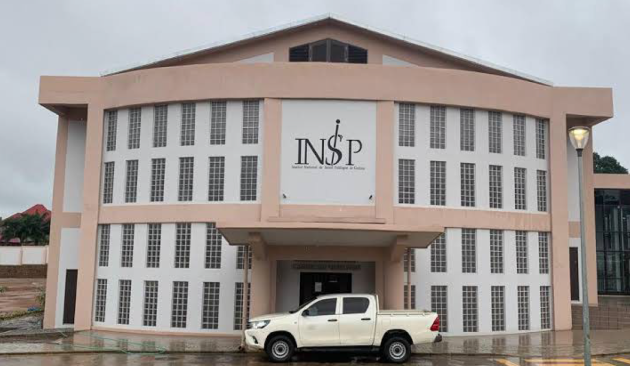
In Conakry, Guinea, the Molecular Biology Laboratory at the National Institute of Public Health (INSP) is entering a new phase in public health preparedness—one defined by speed, autonomy, and locally generated genomic data. Through support from the Mastercard Foundation’s Saving Lives and Livelihoods (SLL) Project, and with technical and logistical backing from ASLM in collaboration with Africa CDC, the laboratory has been transformed into a fully operational genomic sequencing hub. Today, it plays a crucial role in strengthening national and regional genomic surveillance, enabling faster detection, informed response, and greater resilience to public health threats.
Until recently, Guinea’s genomic sequencing capacity remained limited and largely dependent on external partners. While INSP had skilled scientists and strong institutional commitment, persistent gaps in critical equipment, consumables, and reliable reagent supply constraints its operations. Consequently, samples were frequently shipped outside the country for analysis with results often taking weeks to return—delays that significantly weakened timely evidence based decision-making during fast-moving outbreaks.
That reality has now changed The INSP laboratory routinely sequences priority pathogens including- influenza, Mpox (monkeypox), and SARS-CoV-2. With the expanded capacity critical public health intelligence —such as identifying circulating strains, monitoring mutations, and detecting emerging variants—is now generated and interpreted within Guinea, reducing reliance on external laboratories and enabling faster, locally informed public health action.
A key milestone in this transformation is the installation of a modern sequencing platform, the MiSeq i100+, provided through ASLM and Africa CDC with support from the Mastercard Foundation. According to Dr. Ramadan Keita, Bio-molecular Laboratory Manager at INSP, the system stabilized laboratory workflows and enabled uninterrupted sequencing, completing the laboratory’s setup and empowering the team to operate with greater independence and reliability.
In addition to the equipment support, is coordinated training approach that strengthened both laboratory and analytical expertise. INSP teams received wet-lab and bioinformatics training facilitated by NCT Pasteur (Taka) with support from the WHO Regional Office, with sessions supported by Africa CDC in Ethiopia and Côte d’Ivoire, and hands-on laboratory technique training in the Democratic Republic of the Congo. These collective efforts built the confidence and technical depth required to manage the full sequencing workflow—from sample processing through analysis and international data sharing.
As part of Guinea’s sentinel influenza surveillance system, the laboratory processes approximately 50 samples per week, including sequencing of positive COVID-19 samples. This steady throughput strengthens early warning capacity and improves Guinea’s ability to respond rapidly to emerging outbreaks.
Beyond national benefits, the strengthened INSP laboratory contributes to regional and global surveillance networks, reinforcing the importance of connected systems and timely data sharing. Looking ahead, INSP plans to expand sequencing to additional pathogens under a One Health approach, further strengthen bioinformatics pipelines, and continue developing the next generation of scientists—ensuring Guinea remains ready to detect emerging public health threats.